
AI hardware has advanced quickly. New products promise power, larger memory, or better energy use. Whether it is a GPU, an NPU, or a custom AI chip most of the industry focuses on the silicon and the computer structure behind it.
That focus matters. Today’s AI models would not exist without improvements in semiconductor technology. Faster processors, memory, better packaging, and specialized designs have made it possible to train bigger models and run inference in the cloud, cars and factories and on edge devices.
The questions from customers are changing. Companies using AI are no just asking about processor specs. They want to know: How fast can the app be set up? How well will it work with existing software and systems? How easily can it scale? What are the long-term effects on power, cooling, reliability, and operating costs?
The main idea is simple: silicon is still the base. Customers are now looking more at the full AI system because that is what really delivers performance, scalability, efficiency, and business benefits.
AI Chips Still Matter
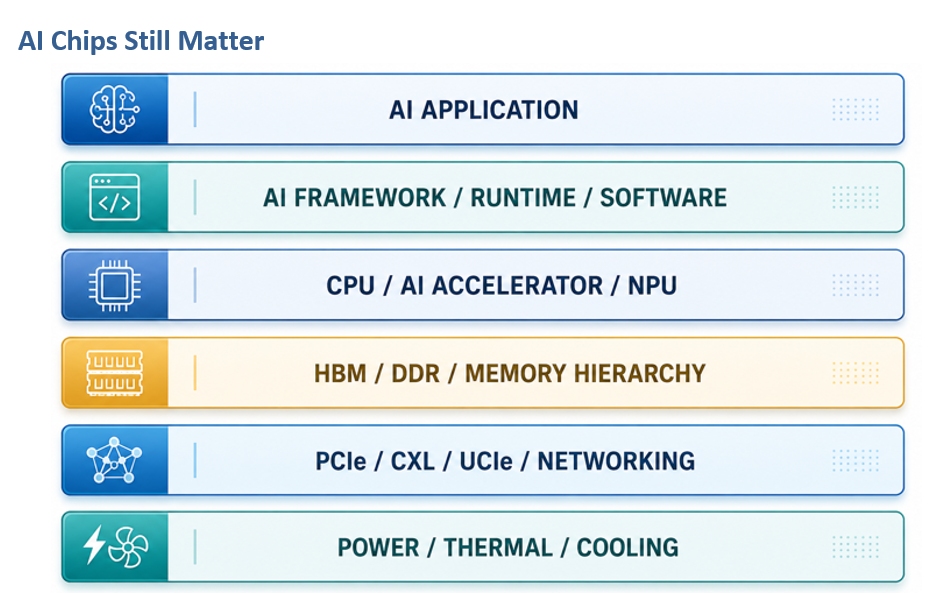
Figure 1. AI SYSTEM — END-TO-END TECHNOLOGY STACK
Every AI system needs silicon. Today’s AI accelerators include compute engines, fast memory connections, optimized data paths, and specialized designs to speed up training and running models. These improvements keep increasing performance while making energy use better.
AI chip design is now more connected to the system needs. The computer setup, memory structure, fast connections, communication links, power delivery, and heat management must all be considered together. As AI workloads get more data-heavy memory speed, data movement, delay, and energy efficiency can matter much as raw computing power.
A strong accelerator cannot fix data movement, poor software, or a poorly balanced system. If data is not reaching the computing parts fast or the software is not using the hardware well a lot of the processor’s potential is wasted.
The Gap Between Silicon Capability and Real-World Performance
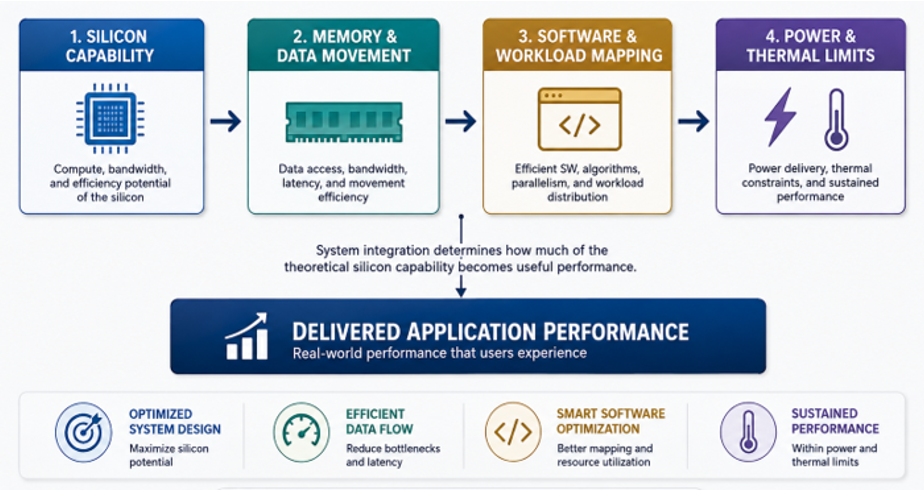
Figure 2. Real-world AI performance depends on the interaction of compute capability, data movement, software, and system constraints.
High specs on silicon are useful. They do not show the full story. Real performance depends on how data is fed into compute resources how well workloads fit the architecture and how the system behaves with power and heat.
Memory and data movement can become a roadblock when compute power is high. Similarly, software frameworks, scheduling, compiler improvements, firmware, drivers and how the app itself is built can all affect how much of the hardware’s power is used.
That is why performance numbers from controlled tests do not always match real-world results. The system design determines how well the silicon’s potential is turned into results.
What Makes a Complete AI System?
An AI application relies on more than the processor sitting on the board. Overall performance relies on hardware design, memory, storage, networking, firmware, operating systems AI frameworks and application software all working together. I have seen how each of these layers can slow things down; if any one of them slows the whole application feels the impact.
The base of this integration starts at the silicon level. AI accelerators must be built around the needed compute architecture, memory hierarchy, fast interfaces and data‑movement needs. Choices about process technology, packaging, power control and interconnects can affect board layout cooling needs, software tweaks and the total system cost.
Technologies, like HBM chiplets and die‑to‑die interconnects are becoming more vital as AI workloads grow. They let compute, memory and I/O resources grow separately. They also bring extra integration problems. So the engineering goal is not just to boost one part but to build a system where compute, memory, interconnect, power, packaging and software all work together.
AI Chips and AI Systems: Understanding the Difference
|
AI Chips |
AI Systems |
|
Focus on compute capability |
Focus on application performance |
|
Measured by TOPS, bandwidth, latency and efficiency |
Measured by deployment, scalability, efficiency and reliability |
|
Hardware component |
Integrated hardware and software platform |
|
Delivers processing capability |
Delivers usable AI solutions |
|
Optimized at silicon level |
Optimized across the technology stack |
|
Success depends strongly on silicon innovation |
Success depends on how every layer works together |
What Customers Really Need to Know
When companies are looking at AI platforms, they need to think beyond just the basic processor specs. They should also look at the picture that affects how well the system works in real life. Things like how fast it can be set up how well it works with software how well it can grow, how much power it uses, how it handles heat how much it costs to run over time how reliable it is and how easy it is to upgrade are just as important as how powerful the processor is.
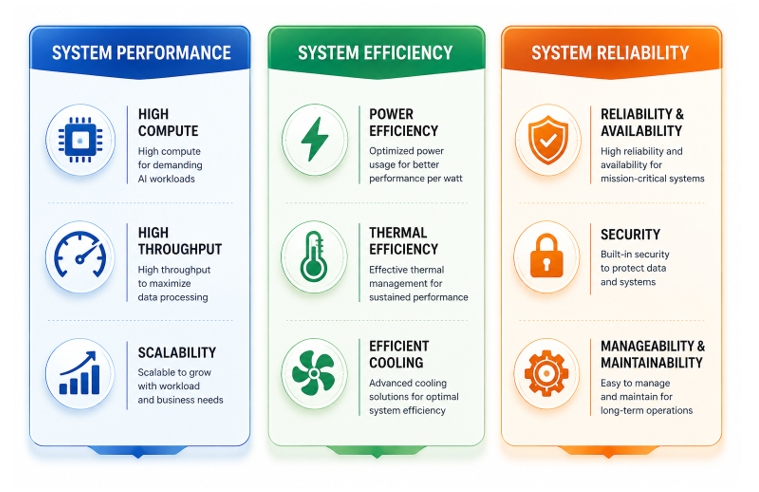
Figure 3. Different deployment environments impose different system-level priorities.
These needs also change depending on what the AI's used for. A cloud company might need to use a lot of chips spread across many servers. A car company might care more about safety, predictable behavior, reliability, and fast response times. Companies that use AI at the edge or in factories might have limits on how much power they use how much heat they create, how big the system is and how much maintenance it needs.
So, there is not a best AI chip. The right chip is the one that fits best with the job it must do where it is used the system’s limits and the company’s goals.
Why an ASIC-to-AI Approach Matters
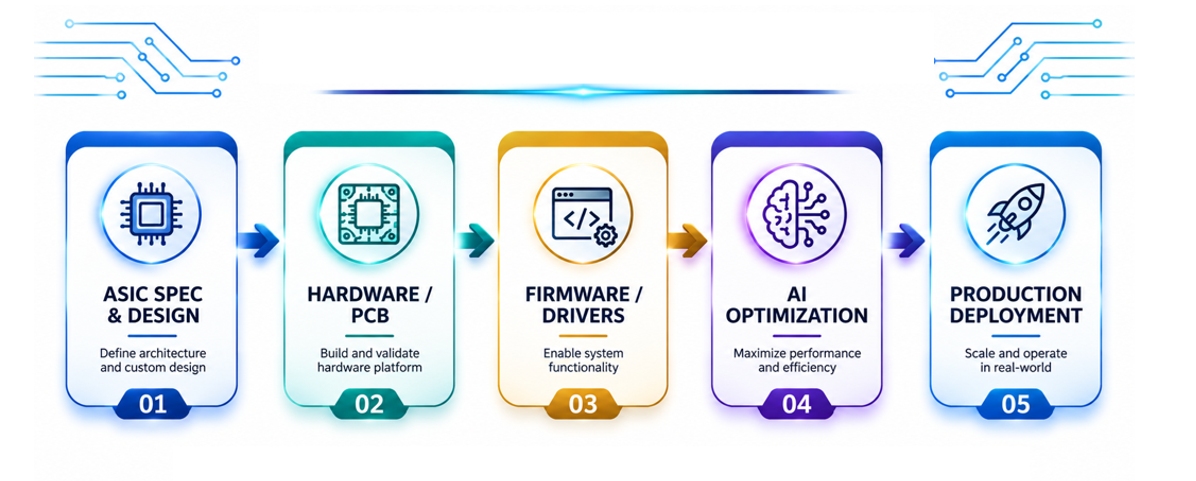
Figure 4. The ASIC-to-AI lifecycle connects silicon architecture to production deployment.
Building AI products requires skills from many different engineering areas. At the chip level this means making sure the special chip (ASIC) matches the needs of the AI work it is going to do. Things like the processors, memory, connections how they are linked together power use, security and heat management need to be considered together during the design.
ASIC implementation, verification, physical design and silicon validation are steps that determine how well the architecture becomes a working device. These choices affect performance, power use, heat management how easy it's to manufacture, reliability and whether the product can grow with future needs.
At the hardware level teams design boards. Power delivery firmware teams and embedded software teams build drivers and system software. System engineers test. Improve application performance. These tasks are linked. A decision made during ASIC development can impact hardware complexity how much heat the device generates, how software can be optimized, how easily it can be made and how reliable it stays over time.
Similarly better firmware, runtime software or changes in system architecture can boost application performance without needing to change the silicon. That’s why taking an end-to-end approach is becoming more important.
The Future Is System-Level Optimization
The AI industry will continue to push the limits of semiconductor technology and faster processors will remain important. Customers are increasingly evaluating platforms rather than silicon in isolation.
They want AI solutions those are reliable scalable efficient cost-effective and ready for deployment. Those outcomes depend on the combined performance of silicon, memory, interconnect, hardware, software, power and thermal infrastructure and system integration.
The future of AI will therefore not be defined by the chip alone. It will be shaped by end-to-end AI systems that integrate every layer of the technology stack to solve real-world problems.
This system-level view creates an opportunity for engineering organizations that can connect disciplines across the product lifecycle. MosChip supports this ASIC-to-AI journey through capabilities spanning turnkey ASIC design and hardware design and development embedded software AI acceleration and system validation.
By bringing these engineering capabilities companies can reduce integration challenges improve system efficiency and accelerate the path from silicon innovation to scalable production-ready AI solutions, across data center, automotive, industrial, healthcare, and edge applications.